(I made this for a friend with a painful boil—and it saved the day)
There’s something incredibly satisfying about whipping up a natural remedy that really works. A few months ago, one of my girlfriends was dealing with a stubborn, painful boil—right where her bra band sits. Ouch. She had tried everything, but nothing was helping. So I handed her a little tin of homemade black drawing salve I’d made for our herbal first aid kit—and within a couple days, it was gone.
She couldn’t believe it. And honestly? Neither could I. But here’s the thing: this salve is no trendy wellness fluff—it’s old-school medicine chest magic, made modern. This stuff pulls. Like… really pulls.
If you’ve got kids, pets, splinters, bug bites, boils, ingrown hairs, or random skin annoyances popping up—this salve might just be your new best friend.

What Is a Black Drawing Salve Used For?
If you’ve ever wondered what that dark gray salve is that herbalists swear by—this is it.
Black drawing salves have been around forever. Traditionally used to “draw out” infections, splinters, boils, and insect stingers, they combine absorbent clays, pulling herbs, and powerful essential oils to help the body do its job—naturally.
Now, let’s be clear: this isn’t some mystery goop. Every ingredient has a purpose. And it’s made with things you probably already have in your herbal cabinet if you’ve been hanging out here a while.
Ingredient Breakdown
- Calendula-infused oil – Gently soothes inflamed skin while speeding healing. (Get my easy infusion recipe here)
- Coconut oil – Antimicrobial + skin-soothing base.
- Castor oil – Helps penetrate deep into skin layers and softens tissue.
- Beeswax – Firms up the salve and locks in the active ingredients.
- Activated charcoal – The “black” in black salve—pulls out toxins, pus, and gunk.
- Bentonite clay – Absorbs impurities and calms inflammation.
- Lavender essential oil – Calming and skin-healing.
- Tea tree essential oil – Antibacterial and antifungal support.
Click here to shop all ingredients in one spot on my Amazon Storefront.
My Go-To Black Drawing Salve Recipe
Ingredients:
- 3 tbsp calendula-infused oil
- 3 tbsp coconut oil
- 2 tbsp castor oil
- 2 tbsp beeswax (pellets or grated)
- 1 tbsp activated charcoal
- 1 tbsp bentonite clay
- 25 drops lavender essential oil
- 15 drops tea tree essential oil
Instructions:
- In a double boiler (or heat-safe bowl over a saucepan), melt the beeswax, coconut oil, castor oil, and calendula oiltogether over low heat.
- Once fully melted, remove from heat.
- Stir in the activated charcoal and bentonite clay until fully incorporated.
- Add your essential oils and mix well.
- Quickly pour into clean tins or glass jars. It will begin to thicken as it cools.
- Store at room temperature. It should last up to a year!
⚠️ Note: Bentonite clay can react with metal, so stir with wood, silicone, or plastic—not metal!
How Do You Use a Black Drawing Salve Safely?
Here’s exactly how I use it on boils, bites, and splinters in our house:
- Clean the skin with warm water and pat dry.
- Apply a small amount of salve directly on the affected area.
- Cover with a clean bandage or gauze.
- Leave on for several hours or overnight.
- Clean off gently and reapply as needed.
This salve will stain light fabrics—consider it a badge of honor.
Quick Safety Tips
- Do a patch test first if you’re prone to skin sensitivity.
- Not for use on deep puncture wounds, open bleeding cuts, or near the eyes.
- Always use clean hands or a tool to scoop it out—no double-dipping.
Shop the Clean Ingredients I Trust
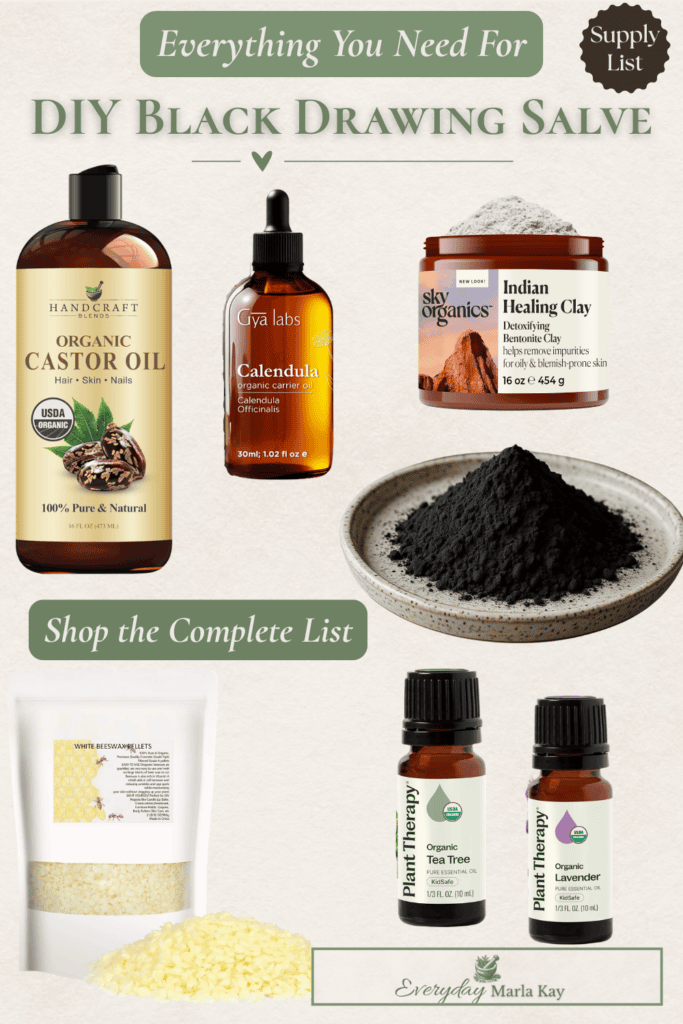
(Affiliate links. Thank you for supporting the blog and helping keep these natural DIYs alive!)
Frequently Asked Questions About Drawing Salve
Q: What does black drawing salve actually do?
A: It helps “draw out” things like splinters, ingrown hairs, pus from boils, insect bites, and toxins using natural absorbent ingredients like activated charcoal and bentonite clay.
Q: Can you use drawing salve on a boil?
A: Yes! That’s exactly what I made it for—and it worked beautifully. Just be sure to clean the skin first, apply a small amount, and cover it with a clean bandage.
Q: Will this stain clothing or sheets?
A: Yep. Activated charcoal will stain fabric, so use a bandage and avoid your favorite light-colored PJs. It’s worth it, though.
Q: Is this safe for kids?
A: It’s gentle, but always do a patch test first and avoid using near eyes or open wounds. I’ve used it on bug bites and splinters with my own family.
Q: Where can I buy the ingredients?
A: I’ve linked all my clean ingredient picks above including activated charcoal, clay, oils, and tins.
Final Thoughts
This little salve tin lives in our home first aid kit now—and it’s earned its place. Whether it’s bug bites, ingrown hairs, or surprise “what the heck is that?!” skin things, this salve shows up and does its job.
Give it a try. You might be shocked at how powerful a few kitchen ingredients can be.
If you make it, tag me on Instagram @everyday_marlakay—I’d love to see your homemade salve! Bonus points if it’s in a cute little jar.
xo Marla Kay